2025 Aug · YC Summer Fellow
Somniac
A headband that catches you grinding your teeth, useful in sleep.
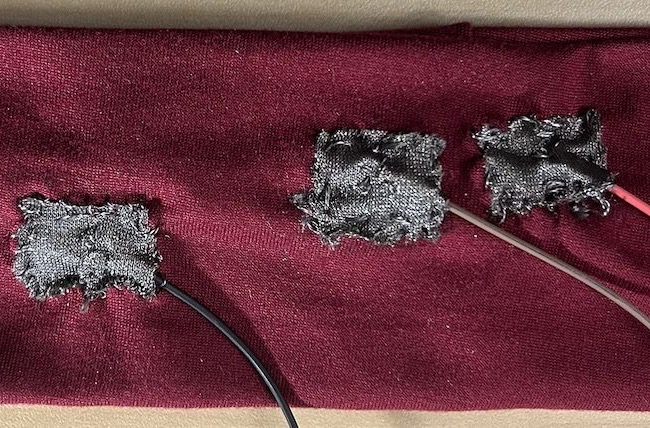
About 1/3 of people grind their teeth at night, mostly without knowing. The result is chipped teeth, migraines, and sometimes jaw fractures. People can only guess what causes it (stress, genetics, facial structure), but there's no real explanation.
The gap
One dentist I interviewed said he often thought a patient was clenching, but he wasn't be sure. Nothing tracks it, so by the time it's visible, this means the damage is already severe.
Reading the muscle
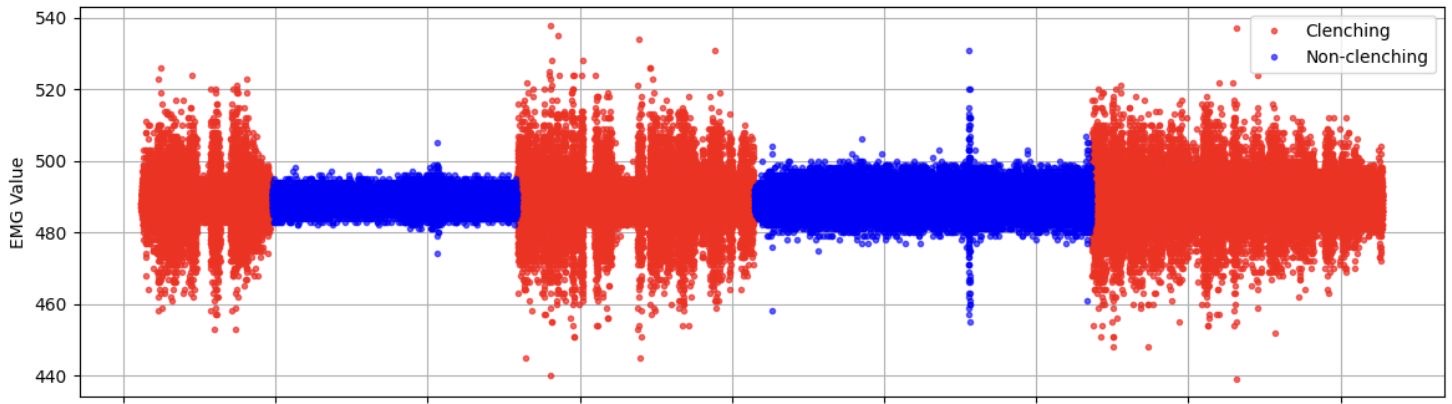
Clenching is a masseter (around temples) contraction. Muscle contractions leak electrical activity we can read off the skin using surface EMG.
Across 8,751 samples the classifier hit 88% on a single user and 80% overall, once you account for the variation between people and between sessions. That gap is why the device calibrates to each user instead of shipping one model for everybody.
Making it wearable
I designed several versions of a custom circuit through two revisions, plus the firmware, BLE integration, and an iOS app to log clenching events and environment changes.
What's next
Detection, the circuit, and the app all work. What I didn't get to is comfort and intervention beyond. Maybe we could use muscle stimulation to interrupt a clench gently enough that nobody wakes up.